Orange Isn’t Just a Color—It’s a Spark.
Few colors ignite the senses like orange. It crackles with warmth and pulses with energy. It radiates a boldness that commands attention. For instance, consider the glow of a desert sunset or the zest of a freshly peeled tangerine. Essentially, orange lives where fire meets earth.
It is neither as aggressive as red nor as passive as yellow. Instead, it strikes a unique balance. This balance feels both inviting and invigorating. Have you ever felt uplifted by an autumn leaf? Similarly, you may have been drawn to a vibrant street mural. These are examples of the magnetic pull of orange.
This blog explores the full spectrum of orange color meaning. Specifically, we will examine its psychological impact and spiritual depth. Furthermore, we will discuss its cultural weight and practical applications.
Key takeaways
- The color orange blends the passion of red and the joy of yellow. Consequently, it is a hue associated with enthusiasm, creativity, and sociability.
- In spirituality, orange symbolizes transformation and sacral energy. It is often linked to the second chakra. Additionally, it connects to healing crystals like carnelian.
- Psychologically, orange stimulates mental activity and encourages communication. Research also indicates it can boost appetite. However, overuse may trigger feelings of frivolity.
- Culturally, orange holds sacred significance in Hinduism and Buddhism. For example, it is the color of monks’ robes. Meanwhile, in Western contexts, it represents caution, autumn, and innovation.
- In practice, orange is used in branding for companies like Fanta. It is also used in interior design as a warm accent. Moreover, in cinema it conveys energy, and in dream interpretation it can symbolize change.
What is the color orange?
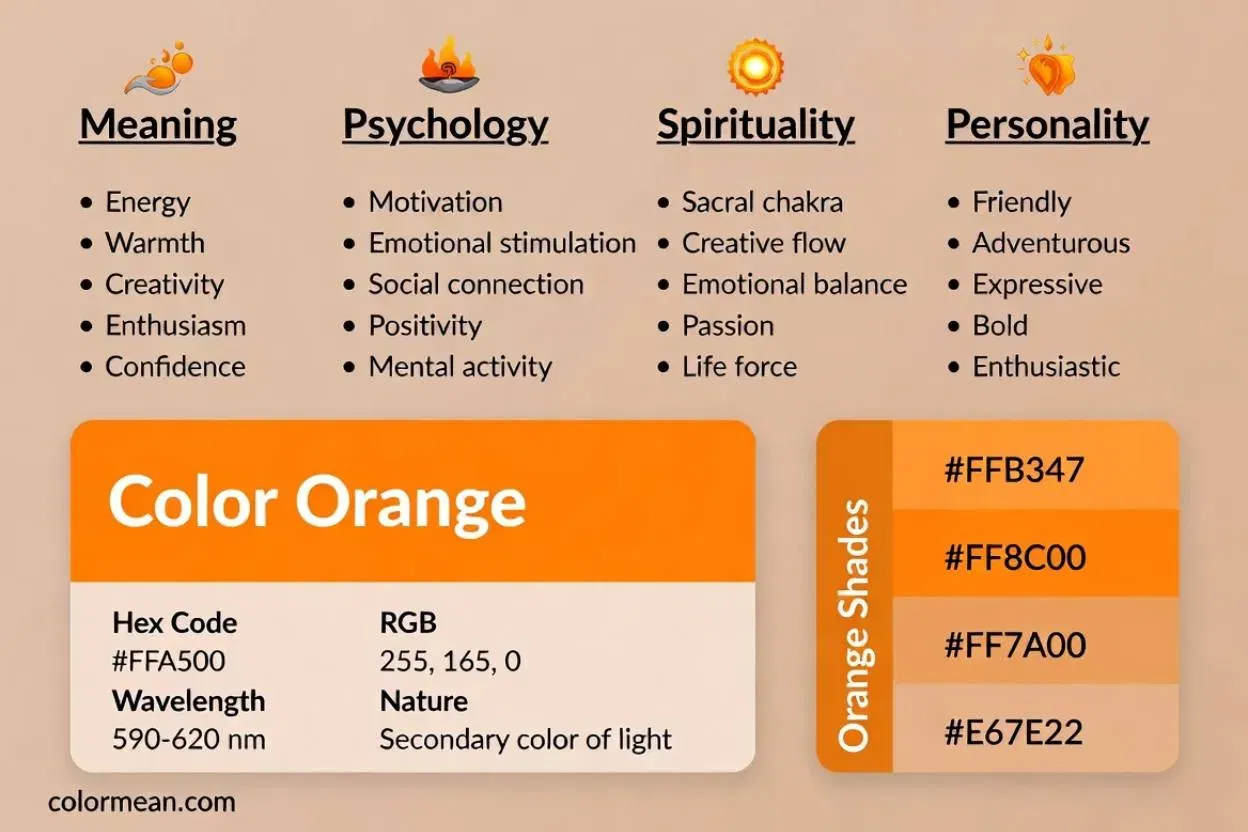
Orange is a secondary color. It sits between red and yellow on the visible spectrum. Specifically, its wavelength measures approximately 590 to 620 nanometers. Scientifically, it results from our eyes blending longer red wavelengths with shorter yellow ones. This creates a hue that feels both warm and energetic. Consequently, this warmth links it closely to fire, sunlight, and physical vitality.
In color science, we perceive orange when our red and green cone cells are stimulated. They react in a balanced ratio that leans toward red. Furthermore, orange is an advancing color that draws the eye. Importantly, it lacks the urgency of red. This makes it ideal for visibility that invites rather than alarms.
Designers use specific codes to reproduce orange in media. For example, standardized color codes ensure consistency.
- Hex Code: #FFA500
- RGB Code: (255, 165, 0)
- CMYK Code: (0, 50, 100, 0)
However, orange is not a single shade. Its popular variations each convey a distinct mood and application.
For instance:
- Peach is soft and pink-tinged.
- Burnt Sienna is deep and earthy.
- Tangerine is zesty and vibrant.
- Copper is metallic and spicy.
- Amber is luminous and warm.
History and interesting facts
History of the color orange
The story of orange begins not with a name, but with a fruit. Before the 16th century, English speakers called the color “yellow red” or “red yellow.” Consequently, the word orange entered English only after Portuguese traders brought sweet oranges from Asia to Europe. Ultimately, the fruit’s vivid rind gave the hue its permanent identity.
Early civilizations struggled to produce stable orange pigments. For instance, Ancient Egyptians used realgar, an arsenic sulfide mineral, to paint tomb walls. However, it darkened over time and was highly toxic. Furthermore, medieval European artists mixed red lead with yellow ochre to approximate orange, though results varied.
True breakthroughs came in the 19th century with synthetic dyes. Chrome orange (lead chromate) emerged in the 1800s. Cadmium orange followed in the early 20th century. These pigments revolutionized painting. They allowed artists like Vincent van Gogh to saturate canvases with fiery suns.
Orange also played a vital role in social movements. In the Netherlands, it became a national symbol through the House of Orange Nassau. Similarly, protesters in Ukraine wore orange during the 2004 Orange Revolution to demand democratic reform.
Additionally, safety workers adopted fluorescent orange in the 20th century. Research shows it contrasts sharply against most natural backgrounds, making it ideal for visibility.
Interesting facts about the color orange
- No natural orange gemstone exists in pure form. Most “orange” gems, like spessartine garnet, get their hue from trace elements like manganese or iron.
- Carrots were originally purple, white, or yellow. Dutch growers in the 17th century cultivated orange carrots to honor the House of Orange. This was a political statement disguised as agriculture.
- Orange is the world’s most visible color from a distance. According to safety research, it cuts through fog, smoke, and haze better than any other hue. Therefore, life vests, traffic cones, and rescue helicopters use it.
- Bees cannot see orange. To them, it appears black. Consequently, many orange flowers rely on birds, not insects, for pollination.
- The aurora borealis often glows orange. This happens when solar particles collide with nitrogen in Earth’s upper atmosphere. The collision emits orange red light.
- NASA uses orange for astronaut launch suits. Known as the “pumpkin suit,” its bright hue ensures easy spotting in ocean rescues.
Symbolism and representation
The color orange has a uniquely complex set of meanings. While other colors have more direct associations, orange does not. Red, for instance, often signals danger or love. Blue commonly represents calm or sadness. In contrast, orange resists simple labels. Its meaning is highly adaptable.
Therefore, it shifts seamlessly from a sacred hue to a playful one. This transformation depends entirely on cultural context and physical setting.
1) Energy and vitality
Orange pulses with tangible, physical energy. This is why it is frequently linked to activity and motion. Many athletes incorporate orange into their uniforms. They report that it helps them feel faster and more dynamic. Additionally, fitness centers often use muted orange on their walls to psychologically encourage movement.
This connection is deeply rooted in human biology. Specifically, the warm tone of orange visually mirrors the body’s internal heat. It evokes sensations of increased blood flow and a faster metabolism.
A study in the journal Perceptual and Motor Skills found that exposure to orange light can temporarily elevate heart rate and arousal levels. So, orange acts as a visual catalyst for physical exertion. (View a summary of color psychology effects)
2) Creativity and innovation
As the color of flame and sunrise, orange is inherently linked to new beginnings. It represents the spark of an idea and the dawn of a project. Consequently, many technology startups and creative agencies adopt orange in their branding.
They use it to convey originality and forward thinking. Importantly, it offers a balance. It avoids the perceived coldness of corporate blue and the intense aggression of red.
Scientific research supports this. A 2019 study demonstrated that orange-hued environments can enhance performance on creative brainstorming tasks. Participants generated more diverse and original ideas. Therefore, orange is a practical tool for fostering innovation. (Learn about the study on color and creativity)
3) Sociability and communication
Orange is an exceptionally social color. It thrives in environments designed for interaction. For this reason, many restaurants, cafes, and social spaces use orange in their decor. The color stimulates conversation and also increases appetite. (See how restaurants use color)
The psychological effect is one of open warmth. Orange helps break down emotional barriers and social inhibitions. It creates an atmosphere where strangers can feel like acquaintances. Essentially, it functions as a non-verbal social lubricant.
4) Transformation and change
Autumn’s brilliant orange leaves are nature’s most powerful symbol of transition. They signal the change from summer’s growth to winter’s rest. Historically, this theme was central to alchemy. (Explore color symbolism in alchemy)
In that practice, the color orange represented a crucial, intermediate stage. It was the phase between the purification of a base material and the achievement of perfection. This positions orange as the color of process and becoming.
5) Sacred devotion
In Eastern traditions like Hinduism and Buddhism, saffron orange is profoundly sacred. Monks and ascetics wear robes in this hue as a mark of renunciation. This choice signifies their deliberate rejection of material life and worldly desires. (Read about the meaning of Buddhist robes)
It is a visible vow of simplicity, humility, and dedicated spiritual pursuit. The vibrancy of the robe symbolizes the burning away of illusion and attachment. Thus, it connects the wearer to a higher state of being.
6) Caution and warning
From highway construction zones to safety vests, orange serves a critical function as a warning signal. However, its psychological impact is carefully calibrated. Unlike red, which signals imminent danger, orange commands attention in a softer way.
It says, “Be alert” or “Proceed with care.” This makes it ideal for temporary hazards. According to safety standards, orange provides high visibility without inducing panic. Consequently, it is the international color for temporary traffic control and life rafts. (Review ANSI/ISEA safety vest standards)
7) Abundance and harvest
Pumpkins, persimmons, and squash firmly tie orange to themes of abundance and harvest. This color represents the earth’s generosity at the end of a growing cycle. It symbolizes the tangible reward of hard labor.
Across many cultures, orange foods are central to harvest festivals and feasts. They are visual reminders of prosperity, fertility, and the successful completion of a cycle. (Discover the history of harvest festivals)
Meaning of the orange color in spirituality
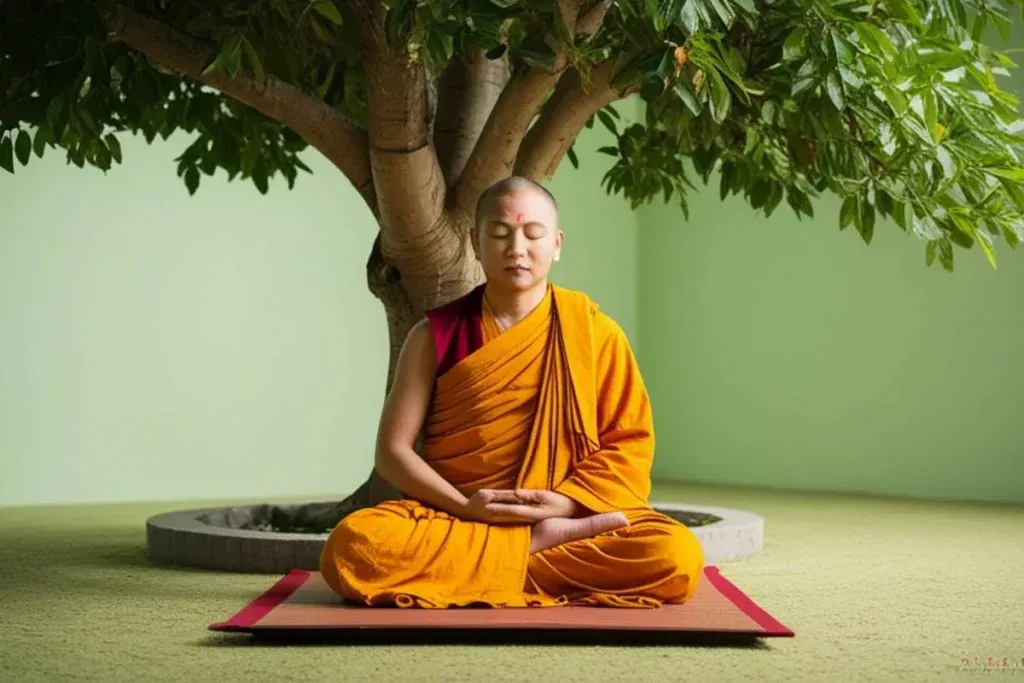
In spiritual traditions, orange is a channel for energy, healing, and inner awakening. Specifically, it centers on the sacral chakra, which governs emotions, creativity, and relationships.
Consequently, meditation often uses orange items to activate this energy center and release emotional blockages. Furthermore, orange bridges the physical body and emotional feeling.
Additionally, crystals like Carnelian and Sunstone amplify this spiritual power for courage and purpose. In Eastern philosophy, orange represents detachment from ego, as seen in Buddhist monks’ saffron robes.
Similarly, in Western practices, it is used in ritual magic and Tarot for attraction and vitality. Ultimately, orange celebrates life in motion, urging open-hearted transformation.
Psychological meaning of color orange
Psychologically, orange stimulates mental and physical activity. Research indicates it increases oxygen to the brain, enhancing alertness without the stress hormone cortisol.
Therefore, soft orange accents are sometimes used in classrooms to maintain engagement. Notably, orange also triggers appetite, a reason fast-food chains use it in logos.
Moreover, in retail, orange price tags signal fun and accessibility. However, context is critical, as bright orange can cause agitation in certain settings like hospitals.
Conversely, studies show orange environments are perceived as more welcoming than blue or gray ones, boosting morale in places like call centers. In moderation, orange fosters optimism, spontaneity, and approachability.
Color orange personality traits

Individuals with a strong preference for the color orange often display its defining characteristics. Their personalities are typically warm, adaptable, and experience-driven. However, like all color associations, the orange personality has potential challenges when traits become unbalanced.
Positive traits
- Enthusiastic: People drawn to orange approach life with genuine excitement. They often initiate plans and celebrate small victories. Consequently, their zest for life can be contagious to others around them.
- Creative: These individuals frequently think in images and metaphors. They actively reimagine the ordinary, whether through art, cooking, or innovative problem-solving. Research in color psychology suggests warm colors like orange can stimulate creative thinking and mental activity.
- Sociable: Orange personalities are natural connectors who thrive in social settings. For example, they often remember personal details and host gatherings. Their primary strength is making others feel included and seen.
- Adaptable: Change does not frighten them; in fact, it often fuels them. They can pivot quickly during disruptions. So, they tend to find new opportunities where others see only problems.
- Courageous: They are known to speak up and take calculated risks. This bravery usually stems from a deep trust in their own resilience. Furthermore, they often defend others without hesitation.
- Generous: They give their time, ideas, and resources freely. Importantly, their generosity is typically intrinsic, driven by the natural joy of sharing rather than a desire for external praise.
Negative traits
- Impulsive: Their eagerness can sometimes override necessary caution. This might lead to spontaneous decisions, like booking trips on a whim, without full consideration of the consequences.
- Overbearing: Their naturally high energy can overwhelm more reserved people. This is especially true if they dominate conversations or social interactions.
- Attention-Seeking: In some cases, they may use flamboyant style or loud humor to stay in the spotlight. Often, this behavior masks deeper insecurities or a need for validation.
- Restless: They commonly struggle with stillness and routine. Boredom can easily lead to distraction, a trail of unfinished projects, or constant digital scrolling. Studies on stimulation-seeking behavior link this trait to a need for varied and novel experiences.
- Superficial: When unbalanced, they may prioritize fun over depth. As a result, they might avoid difficult but necessary conversations or emotional vulnerability.
- Reckless: Their love for adventure can sometimes ignore real consequences. This can manifest as financial, relational, or physical risk-taking without proper forethought.
What does the Bible say about color orange?
The Bible never explicitly names the color “orange.” This is because ancient Hebrew and Greek languages did not have a specific word for orange. Instead, they described orange-like hues using combinations like “fiery red,” “golden yellow,” or “amber.” However, the biblical meaning of orange emerges indirectly through vivid imagery.
For example, the prophet Ezekiel describes divine visions using terms like “glowing metal.” Specifically, Ezekiel 1:27 sees a figure with a torso like “glowing metal, as if full of fire.” Consequently, many scholars interpret this glowing metal as resembling molten bronze or amber. These hues fall within the orange spectrum. Therefore, these passages link orange-like tones to divine presence, holiness, and awe-inspiring power.
Similarly, Revelation 1:15 describes Christ’s feet as “like bronze glowing in a furnace.” Heated bronze emits a deep orange-red radiance. This imagery powerfully conveys themes of purification through trial and enduring strength. Furthermore, fire itself is a frequent biblical symbol, as seen in the burning bush (Exodus 3:2) and the tongues of fire at Pentecost (Acts 2:3). The orange flames symbolize God’s guidance, judgment, and transformative spirit.
Though not directly named, orange’s essence permeates biblical symbolism through key materials:
Amber: Mentioned in Ezekiel and linked to divine glory.
Gold: Often described with warm, reflective qualities akin to metallic orange.
Fire: A recurring motif representing both destruction and renewal.
Cultural and religious significance of the orange color
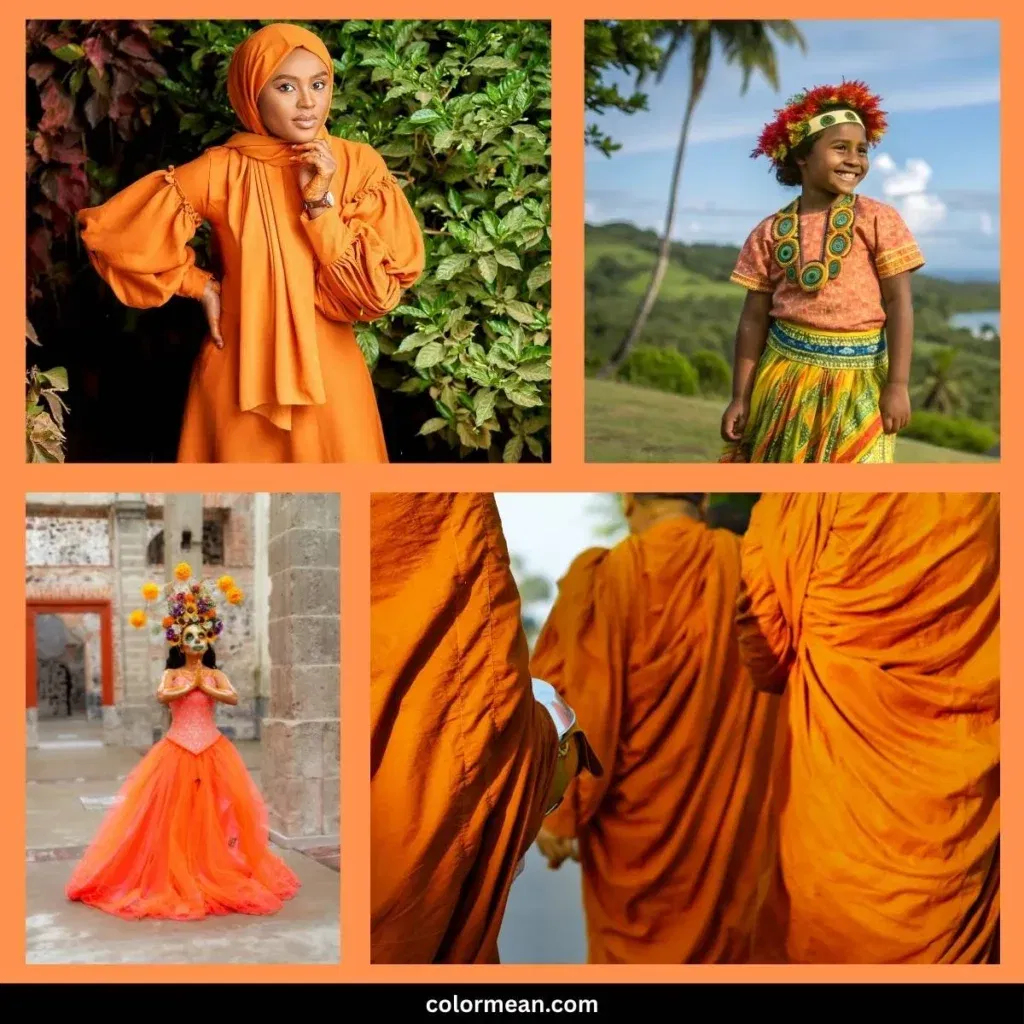
Across continents and centuries, orange holds profound meaning. Its interpretations shift dramatically based on context, but the color always carries significant weight.
Hinduism
In Hinduism, orange—specifically saffron—is the most sacred color. Holy men, or sadhus, wear saffron robes to symbolize their renunciation of material life and pursuit of spiritual liberation (moksha). Additionally, orange marigolds are used in temple offerings. This enhances purity and devotion. The color also represents fire (Agni), which purifies offerings sent to the gods.
Buddhism
In Theravāda Buddhist traditions, monks wear robes dyed orange or saffron from natural sources like jackfruit or turmeric. This hue signifies humility and detachment. Importantly, it represents the Middle Path between indulgence and extreme asceticism. Meanwhile, in Tibetan Buddhism, orange appears in mandalas to denote spiritual transformation.
Christianity
Orange is less prominent than colors like red or purple in Christianity. However, it surfaces symbolically in some denominations. For instance, it is used during Advent to symbolize anticipation, blending the hope of purple with the action of red. It also recalls the fiery descent of the Holy Spirit at Pentecost. Furthermore, in Orthodox iconography, orange-gold halos denote divine light.
Islam
While green dominates Islamic symbolism, orange appears in regional traditions. In Iran and South Asia, orange turbans or fabrics can mark descendants of the Prophet Muhammad. Also, saffron-infused foods are served during Muharram to honor sacrifice.
Ancient Egypt
Ancient Egyptians associated orange-red hues with the sun god Ra and the afterlife. They used minerals like realgar and orpiment in tomb paintings to depict vitality and protection. Moreover, the orange lotus flower symbolized rebirth because it opens at sunrise each day.
Native American cultures
Many tribes view orange as the color of kinship and healing. For example, the Hopi people use orange clay in ceremonial masks. Similarly, the Navajo link it to the south direction, summer, and a time of growth. Orange corn pollen is often sprinkled in blessings for abundance.
Chinese culture
In Chinese culture, orange is considered lucky and auspicious. This is especially true during Lunar New Year. Tangerines and oranges are popular gifts because their names are homophones for “luck” and “success” in Mandarin. Therefore, unlike Western associations with caution, Chinese tradition sees orange as joyful and generous.
Dutch national identity
The Dutch royal family belongs to the House of Orange-Nassau. Consequently, orange evolved into a powerful national symbol of unity and pride. It is worn ubiquitously during King’s Day celebrations and sporting events. Ultimately, it functions as a unifying element of Dutch cultural identity.
Irish history
In Northern Ireland, orange represents Protestant unionists. This association stems from William of Orange’s victory at the Battle of the Boyne in 1690. The color appears in the Irish flag’s tricolor: green for Catholics, orange for Protestants, and white for the peace between them.
Japanese aesthetics
While not dominant, orange appears in autumn festivals celebrating maple leaves (momijigari). In line with wabi-sabi philosophy, it conveys the quiet beauty of impermanence and natural transition.
Dream interpretations of color orange

When orange appears in dreams, it rarely signals danger or deception. Instead, it often reflects inner vitality and emotional shifts. It can also symbolize untapped creativity.
Unlike red, which may warn of anger, or black, which can symbolize fear, orange tends to carry constructive energy. Specifically, it has a forward-moving quality.
Seeing orange objects like pumpkins or sunsets usually points to warmth in relationships. Additionally, it can signify a desire for connection.
Dreaming of an orange sky at dawn suggests a new phase is beginning. This could be a project, romance, or personal insight. If the orange feels bright and inviting, your subconscious may be encouraging you to take a social or creative risk.
However, context alters the meaning. For instance, a flickering orange flame might represent passion that needs tending. Conversely, a dull or muddy orange could indicate suppressed emotions or even burnout.
Eating orange fruit in a dream often symbolizes nourishment. This includes either physical health or emotional fulfillment. On the other hand, spilling orange paint might reveal anxiety about being too visible.
Recurring orange dreams are common during major life transitions. These include moving, career changes, or breakups. The color acts as an internal compass. It reminds you that change carries its own kind of beauty.
Psychologists note that people recovering from depression often report vivid orange dreams as their mood lifts. This suggests the hue mirrors a psychological reawakening.
How to use the color orange
The usage of orange spans practical, aesthetic, and symbolic domains. When applied with intention, it enhances communication, boosts engagement, and adds emotional depth. Below are key applications across industries and daily life.
1) Color orange in business
Orange conveys approachability and innovation. Consequently, it is ideal for startups and tech firms. It helps service-based businesses stand out without intimidating.
Companies like Fanta and Nickelodeon use orange to signal fun and accessibility. In offices, muted orange accents can stimulate collaboration. Research in environmental psychology suggests such colors can reduce mental fatigue during long meetings.
2) Color orange in branding and marketing
Marketers leverage orange to drive action. For example, call-to-action buttons in e-commerce perform better in orange than in gray or blue. This is because the color creates urgency without aggression.
Discount retailers like Home Depot use orange to imply value and friendliness. However, luxury brands often avoid saturated orange as it reads as affordable, not exclusive. For premium positioning, designers opt for deep rust or amber tones instead.
3) Color orange in interior design
In homes, orange works best as an accent color. A burnt orange throw pillow or a terracotta vase adds warmth to neutral spaces.
Kitchens and dining rooms benefit most since orange can stimulate appetite and conversation. In bedrooms, soft peach tones promote comfort without overstimulation. Feng Shui recommends orange in the south area of a room to activate fame and reputation energy.
4) Orange color in cinema
Filmmakers use orange to convey transition or emotional intensity. In Her (2013), orange light reflects the protagonist’s longing. Amélie (2001) uses warm orange palettes to create whimsy and nostalgia.
Action films often tint explosion scenes in orange to heighten realism. Orange also appears in “golden hour” cinematography to signal fleeting beauty or memory.
5) Orange color In humans
Human skin tones span the orange spectrum. Makeup artists use orange-based correctors to neutralize dark circles because orange cancels blue.
In health, a slight orange tint in skin can indicate excess beta-carotene, which is harmless. Conversely, jaundice produces a yellow-orange cast signaling liver issues. Culturally, orange skin from sunless tanners has symbolized leisure and vitality.
6) Orange color in makeup
Orange tones dominate seasonal makeup lines. They flatter nearly all skin tones when properly balanced. Warm undertones shine with true orange lipsticks. Cool undertones suit muted brick shades.
Orange eyeliner adds playful drama without the harshness of black. However, over-application can look theatrical, so precision matters.
These applications prove that orange is never just decorative. It communicates, activates, and connects.
7) Orange food
Orange foods are vibrant and nutritionally powerful. Carrots, sweet potatoes, and mangoes owe their hue to beta-carotene. This is a precursor to vitamin A, essential for vision and immunity.
Chefs use orange ingredients to add visual pop and natural sweetness. Culturally, orange foods dominate autumn menus worldwide, symbolizing abundance.
8) Orange color in quotes and idioms
Language reflects orange’s dual nature. For example, the phrase “orange alert” stems from the U.S. Homeland Security scale. The phrase “bleed orange” is used by university fans to express fierce loyalty.
Though fewer idioms feature orange than red or blue, its presence often signals visibility or urgency.
9) Orange color in art and architecture
Artists have long exploited orange’s emotional range. Van Gogh’s Sunflowers pulses with life through layered chrome orange.
In architecture, orange brick defines historic districts in cities like Boston. Modern designers incorporate terracotta tiles or amber glass to add warmth. The Getty Center uses travertine stone with orange undertones to harmonize with sunlight.
10) Songs with orange in the title
Music embraces orange as a metaphor. Notable tracks include:
- “Orange Colored Sky” by Nat King Cole—a jazz standard about love striking like lightning.
- “Orange Juice” by Rex Orange County—blending melancholy and hope.
- “Orange” by Al Stewart—evoking 1960s counterculture.
These songs use orange to signify surprise, warmth, or nostalgia.
11) Cities with color names: Orange
Several towns bear the name “Orange.”
- Orange, California, is a historic citrus hub.
- Orange, New South Wales, celebrates with an annual Orange Wine Festival.
- In France, Orange boasts a Roman theater that glows amber at sunset.
Each ties the color to land, light, and legacy.
12) The color orange in the garden
Gardens burst with orange in late summer and fall. Marigolds repel pests while attracting pollinators. Tiger lilies command attention with speckled petals. Even foliage turns orange, with maples creating fiery canopies.
Gardeners use orange blooms to bridge red and yellow beds seamlessly. Beyond beauty, orange plants support ecosystems. For instance, monarch butterflies rely on orange milkweed for survival.
Technical information
Color Conversion
RGB Values & CMYK Values
Color Variations
Color Harmonies
CSS Examples
Final thoughts
The meaning of orange defies simple labels. It is neither purely spiritual nor entirely commercial. Instead, orange lives in the dynamic space between opposites. Its power lies in its accessibility.
Anyone can wear it, grow it, or paint with it and instantly feel more alive. From the robes of monks to safety cones, orange serves humanity. It reminds us that transformation is natural and connection is vital. Ultimately, joy need not be loud to be real.
Therefore, consider what orange offers: not perfection, but presence. Not noise, but warmth. Not answers, but invitation.