Red Isn’t Just a Color—It’s a Pulse.
Red stops traffic, ignites romance, and commands attention. It is the first color the human eye notices. Remarkably, it is also the last one it forgets.
From the flush of anger to the warmth of love, red lives in extremes. Consequently, it fuels revolutions and seduces hearts. Whether on a sports car or a ceremonial robe, red never whispers. Instead, it shouts, pulses, and lives.
If your heartbeat quickens at red lipstick, you feel its primal pull. Similarly, pausing at a stop sign shows its instant command. However, there is far more beneath its surface than emotion.
So, red weaves through history, spirituality, and design with unmatched intensity. This post unpacks the full spectrum of red. Specifically, we will explore what it does to us and how it shapes societies.
Key takeaways
- Red is the color of action, energy, and urgency. Importantly, it triggers strong physiological responses.
- Spiritually, red governs the root chakra. This symbolizes survival, grounding, and life force.
- Across cultures, red carries dual meanings. For example, it blesses weddings in China but marks danger in Western signage.
- In branding, red drives impulse purchases. As a result, it dominates fast food and entertainment industries.
- Psychologically, red can boost confidence and arousal. But overuse may provoke stress or aggression.
What is the color red?
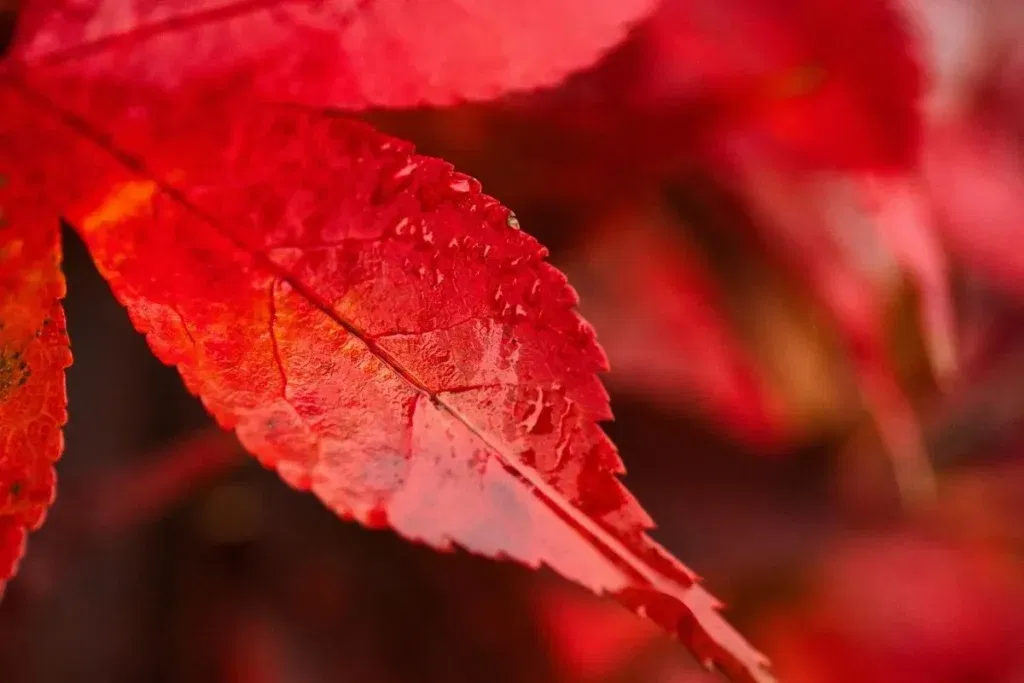
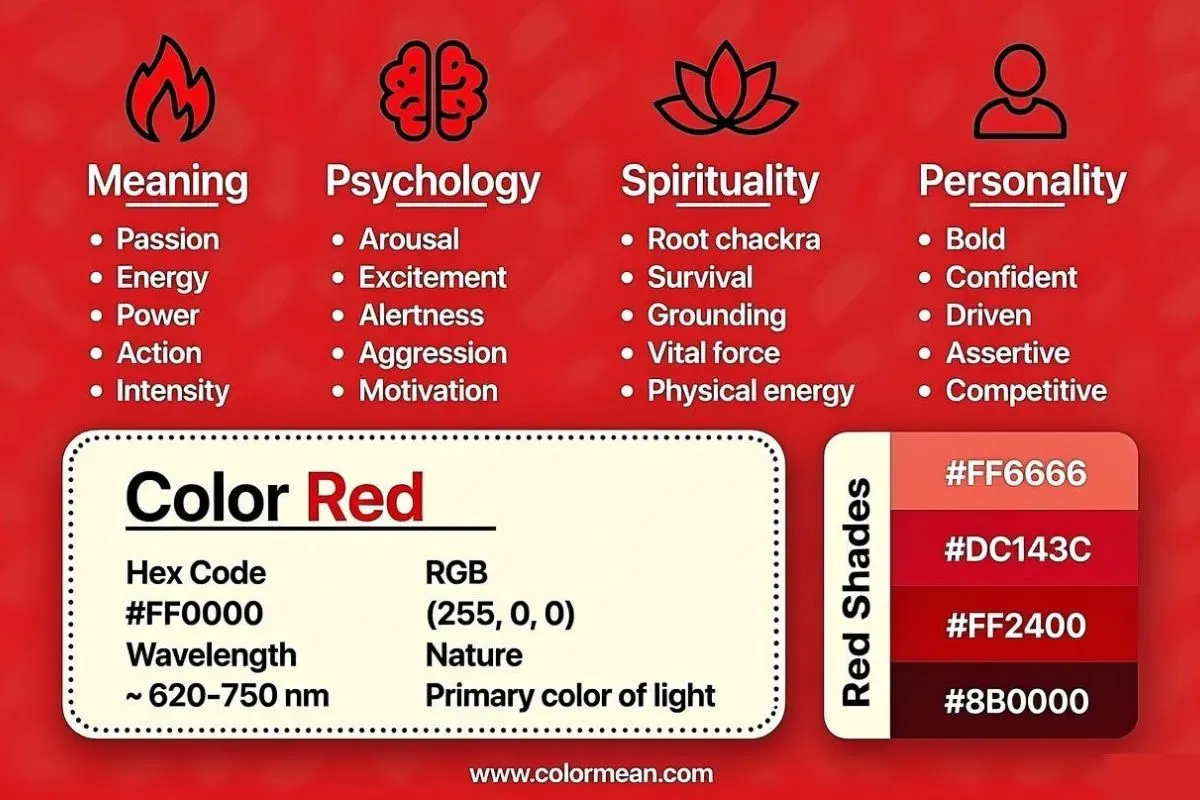
Red sits at the long wavelength end of the visible light spectrum. Its wavelengths measure between approximately 620 and 750 nanometers. As a primary color, it cannot be created by mixing other hues.
Human eyes detect red through specialized cone cells (L-cones). Significantly, research shows it is the first color newborns can distinguish, proving its biological impact. In nature, it signals both danger and desire, from ripe fruit to poisonous animals.
Unlike cooler colors, red advances visually. It feels closer and more immediate, which mirrors its psychological effect. Ultimately, red demands reaction and is never ignored.
Designers use specific codes to reproduce red accurately:
- Hex Code: #FF0000
- RGB Code: (255, 0, 0) – for digital screens.
- CMYK Code: (0, 100, 100, 0) – for print materials.
From the fiery orange-tinted Scarlet to the deep, purple-leaning Crimson, red’s popular shades each tell a distinct story. The spectrum continues with the vivid Vermilion, the wine-dark Burgundy, and the intensely natural Carmine, proving red is far from a single note.
History of the color red
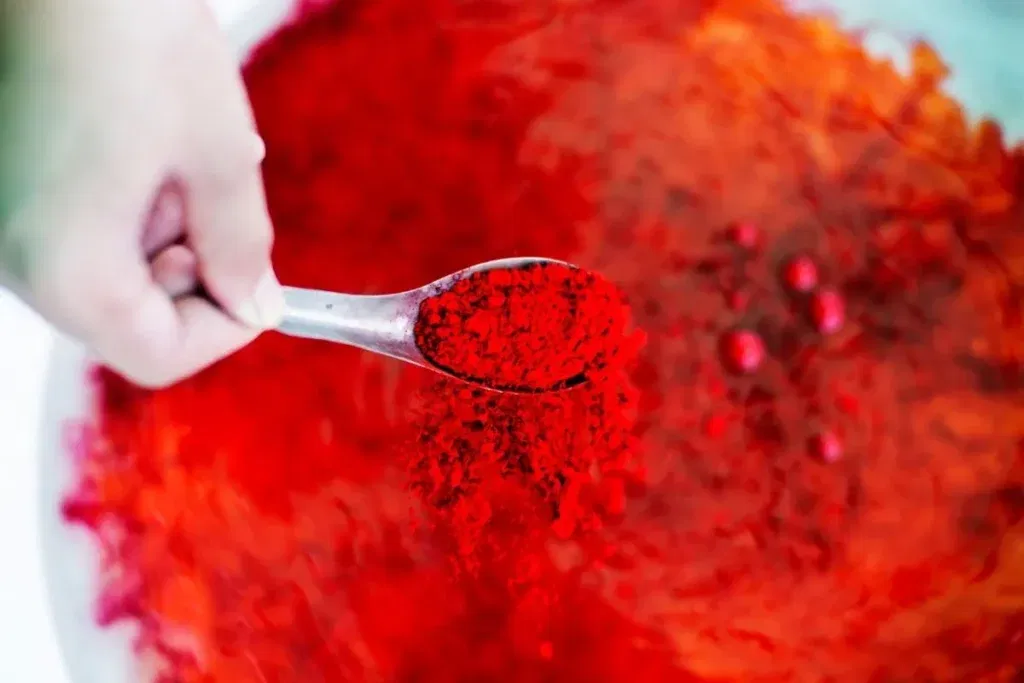
Red is one of humanity’s oldest pigments. Prehistoric artists used iron-rich ochre over 70,000 years ago. They painted cave walls in Africa and Europe.
These early reds represented life, blood, and ritual. Consequently, they marked hunting scenes and burial sites.
Ancient civilizations refined red dyes with precision. For example, Egyptians used red ochre in cosmetics. They associated it with the desert god Set.
Meanwhile, in China, cinnabar adorned imperial palaces by 2000 BCE. This vivid mercury sulfide was believed to grant immortality. However, its mercury content was highly toxic.
Furthermore, the Romans prized kermes dye from crushed insects. Nearly 70,000 insects yielded one pound of dye. Therefore, crimson robes symbolized extreme wealth.
Later, European elites used cochineal dye from the Americas. This insect-based red was so valuable it traded for silver.
Natural reds dominated until the 19th century. Then, in 1856, chemist William Henry Perkin accidentally created the first synthetic dye.
This breakthrough led to synthetic alizarin crimson in 1868. It replicated expensive madder root dye. As a result, red became affordable and mass-produced.
Today, red pigments include cadmium red and iron oxide. However, its symbolic weight remains unchanged. Red continues to signify power, sacrifice, and vitality.
Interesting facts about the color red
- Red is the most visible color from a distance. The human eye detects it faster than any other hue. Therefore, emergency vehicles and warning signs use red.
- Wearing red boosts perceived dominance. Research shows athletes in red uniforms win more often. Opponents may subconsciously view them as stronger.
- Additionally, red increases heart rate and blood pressure. This mild physiological arousal explains its use in restaurants and sales.
- Bees cannot see red. To them, red flowers appear black. In contrast, birds like hummingbirds are strongly attracted to red blooms.
- Mars is red due to iron oxide. The planet’s rusty surface comes from oxidized iron dust.
- Moreover, red was the first color named after black and white. Linguistic research confirms it is the third color term to develop in nearly every language. This highlights its primal importance in human cognition.
Symbolism and representation of red
Red symbolizes contradiction. It represents both life and death. Similarly, it signifies love and war, as well as purity and sin. In many societies, red represents blood. Blood is the literal essence of life. Consequently, red naturally symbolizes vitality, courage, and sacrifice.
However, blood also appears in injury and violence. Therefore, red equally signifies danger, warning, and aggression.
In romantic contexts, red signals passion and desire. For example, this is seen in red roses, hearts, and lingerie. In political arenas, red flags wave for revolution or labor movements. Furthermore, it is tied to communism. In religious settings, red honors martyrs. It also celebrates the Holy Spirit’s fiery presence.
The duality continues. For instance, red carpets welcome celebrities. Meanwhile, red lights mark restricted zones. This tension between attraction and alarm is the defining paradox of red.
Meaning of the color red in spirituality
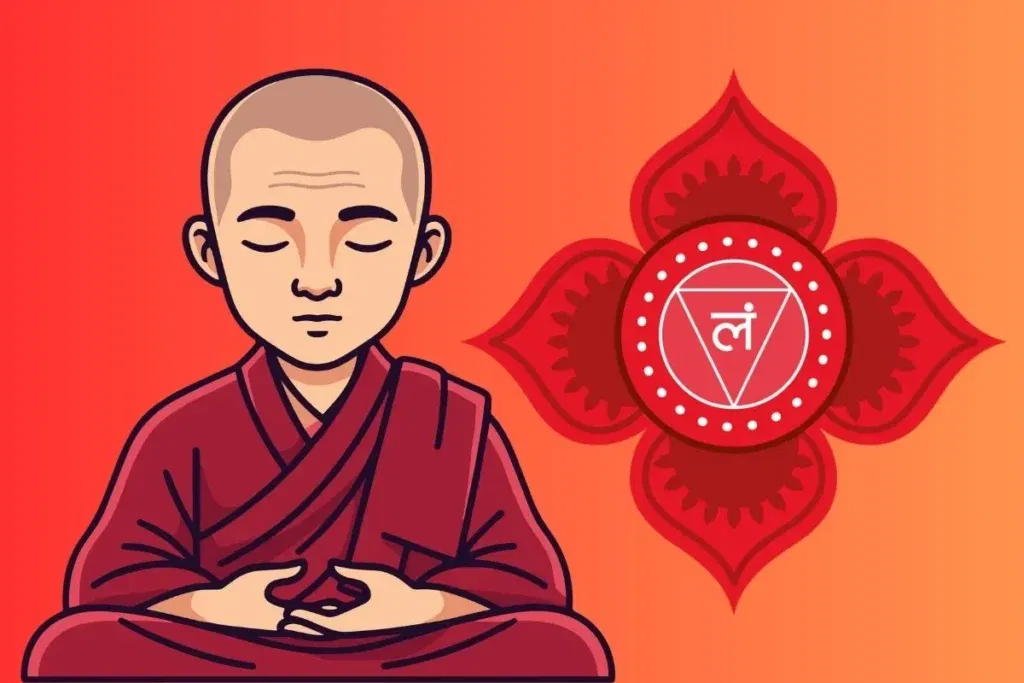
Spiritually, red anchors human experience to the physical plane. It governs the root chakra, called Muladhara. This energy center is located at the base of the spine. It connects us to Earth and our survival instincts. Additionally, it relates to basic needs like food, shelter, and safety.
A balanced root chakra radiates stability and courage. It also provides groundedness. Conversely, a blocked root chakra can manifest as fear or anxiety. It may also cause a disconnection from the body.
In aura reading, a strong red hue suggests high energy and physical strength. It also indicates a passionate drive. However, muddy or excessive red may point to anger or impulsivity. It can also signal unresolved trauma.
Spiritual practitioners often use red candles in rituals. These rituals focus on protection, strength, or manifestation. They are especially used for invoking courage or breaking through stagnation.
Red crystals amplify vitality and security. Examples include garnet, red jasper, and ruby. Garnet is known as a traveler’s stone. It is historically believed to protect against danger. Ruby symbolizes divine love. Ancient Sanskrit texts mention it as the “king of gems.”
These stones are commonly placed at the base of the spine during meditation. Alternatively, they are worn as talismans to reinforce personal power.
Across traditions, red plays a sacred role. Hindu brides wear red saris as a symbol of fertility and prosperity. Tibetan monks wear red robes to signify spiritual commitment. In Native American ceremonies, red face paint honors the life force. This is done in rituals of healing and war.
Psychological meaning of the color red

Psychologically, red is the ultimate stimulant. It activates the sympathetic nervous system. As a result, it increases adrenaline, heart rate, and respiration. This makes red uniquely effective in environments requiring alertness. Examples include gyms, kitchens, and emergency exits.
Red also influences social perception. Research indicates people dressed in red are often judged as more attractive and dominant. They are also seen as more confident. A 2008 study in the Journal of Personality and Social Psychology found that red boosts perceived desirability in dating contexts. In competitive settings, red conveys authority. Consider red ties in boardrooms or red jerseys in sports.
However, red’s intensity has limits. Prolonged exposure can cause agitation or irritability. It may also lead to mental fatigue. For example, classrooms painted red may hinder concentration. Similarly, red lighting in hospitals can heighten patient anxiety. Therefore, while red excels in short bursts of energy, it falters in spaces meant for calm or reflection.
Designers and marketers leverage this psychology deliberately. Major fast food chains like McDonald’s and KFC use red. The color stimulates appetite and encourages quick customer turnover. Clearance sales use red tags to create urgency. Digital interfaces use red for critical buttons, like delete or error messages. Essentially, red commands: “Pay attention. Act now.“
Color red personality traits

People strongly drawn to red often radiate charisma, confidence, and a take charge attitude. Additionally, they thrive on action. They also respond quickly to challenges. Furthermore, they rarely shy away from confrontation. Their energy is contagious. Consequently, their presence fills a room.
Positive Traits
Red personalities are natural leaders. For example, they show remarkable courage in crises. They also make decisions swiftly. Importantly, they inspire others through sheer willpower. Moreover, they value honesty and speak directly. Typically, they prefer doing over planning.
Their passion fuels creativity, entrepreneurship, and physical pursuits. As a result, they often become excellent athletes, performers, or emergency responders. According to research, the color red can actually enhance physical performance and increase dominance behaviors. This is supported by studies in color psychology.
Negative Traits
On the downside, red types can be impulsive, impatient, or overly aggressive. For instance, they may dominate conversations. Alternatively, they might dismiss slower thinkers. Sometimes they act before fully considering consequences.
When stressed, they lean toward anger, recklessness, or emotional outbursts. Without balance, their intensity becomes exhausting. This affects both themselves and others.
Important Note: Loving red does not mean you embody all these traits. However, a consistent preference for red in clothing, decor, or branding often signals a desire. This desire is typically for control, visibility, or emotional intensity.
What does the Bible say about the color red?
Red appears throughout the Bible with layered meanings. These are often tied to blood, sacrifice, sin, and divine presence.
In the Old Testament, red dye from crushed insects was used in priestly garments. This dye, called tola’at shani, symbolized holiness and atonement (Exodus 25:4, 26:1).
Isaiah 1:18 uses red as a metaphor for sin. It states, “Though your sins are like scarlet, they shall be as white as snow.” Here, scarlet represents a deep moral stain. Ultimately, the verse offers hope through divine cleansing.
In the New Testament, red reappears during Christ’s crucifixion. Soldiers mock Jesus by dressing Him in a scarlet robe (Matthew 27:28). This act unintentionally fulfilled prophecy. It also symbolized both royal dignity and sacrificial blood.
Later, the Book of Revelation describes a “great red dragon” (Revelation 12:3). This links red to chaos and evil. However, it also points to cosmic battle and ultimate redemption.
Crucially, red in Scripture is never neutral. It always carries theological weight. This is either as a sign of human frailty or divine intervention.
Cultural and religious significance of the color red
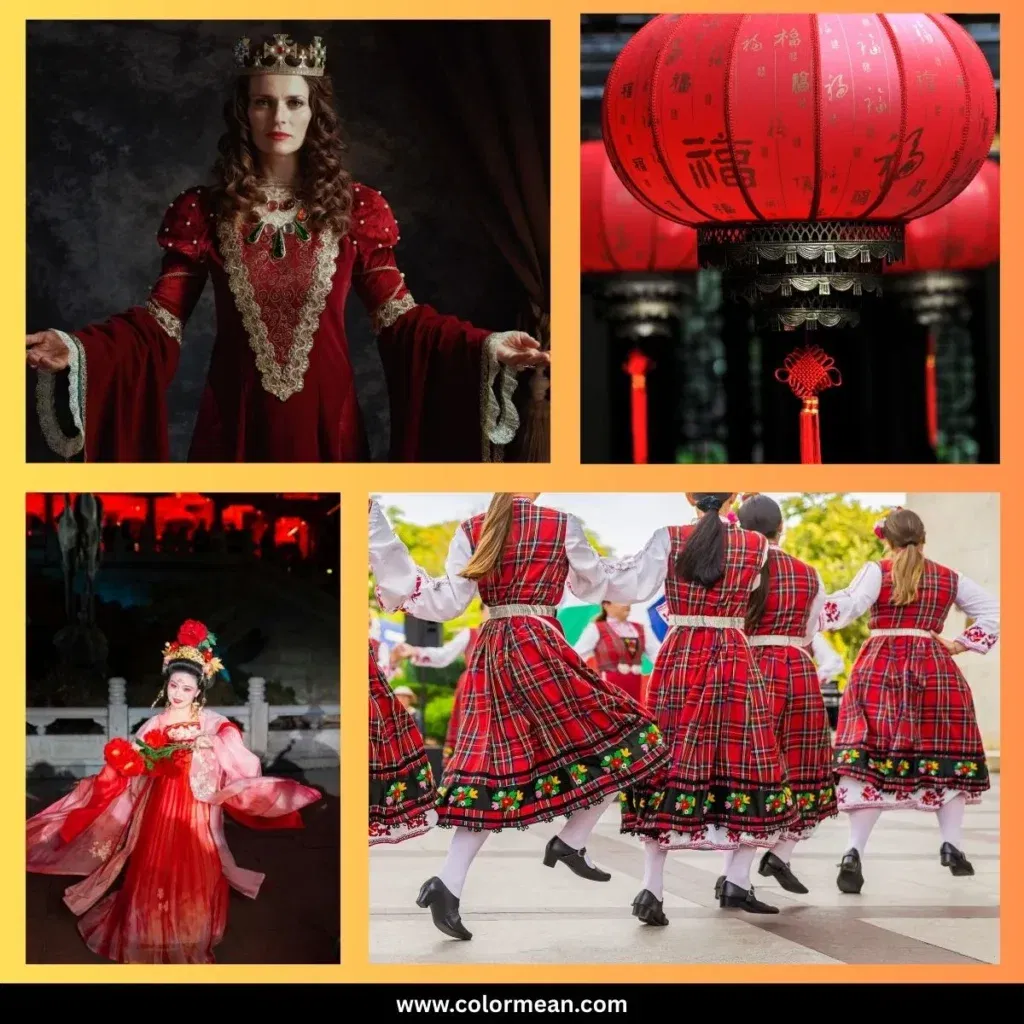
Red’s meaning shifts dramatically across cultures. It can be a blessing or a warning.
- China: Red is the ultimate lucky color. It symbolizes joy, prosperity, and success. Brides wear red qipaos. Red envelopes are used for monetary gifts. Entire cities blaze with red lanterns during Lunar New Year to ward off evil spirits.
- India: Red signifies purity, fertility, and marital bliss. Hindu brides apply red sindoor along the hair parting. This is a mark of marriage. Red is also linked to the goddess Durga, representing divine feminine power.
- Japan: Red appears in Shinto shrines, like the famous torii gates. It is a sacred color that repels evil and invites spirits known as kami.
- South Africa: Red is connected to mourning and sacrifice. The Xhosa people use red blankets in funeral rites. This honors the deceased’s journey to the ancestors.
- Christianity (Western): Red represents the blood of Christ, martyrdom, and the Holy Spirit. Pentecost is marked with red vestments. This symbolizes the fiery tongues of the Spirit.
- Islam: Red appears in cultural contexts like Persian carpets. It is a symbol of courage and vitality. Some Sufi traditions use red robes to signify spiritual passion.
- Ancient Rome: Red togas marked high ranking officials. Soldiers wore red to project strength. However, excessive red could imply vanity.
- Native American Tribes: Groups like the Lakota and Navajo use red face paint in ceremonies. It represents life, war, or the east direction (sunrise and beginnings).
Dream interpretations of the color red

Dreaming in red rarely goes unnoticed. This color often appears during moments of heightened emotion or transformation. Importantly, a red object, room, or figure usually signals urgency, passion, or unresolved tension.
For example, seeing red blood in a dream may reflect health anxiety, guilt, or a feeling of drained vitality. Conversely, it can symbolize rebirth or the need to confront a painful truth. Meanwhile, red clothing often points to confidence, sensuality, or a desire to stand out. Consequently, wearing red in a dream might mean you are preparing to take bold action in your waking life.
Additionally, a red door can represent opportunity or a secret longing. This is especially true if it is locked or appears inviting. Furthermore, red animals, like a cardinal or fox, often carry spiritual messages. These typically relate to instinct, warning, or sudden change. In fact, many traditions interpret a red bird sighting after a loss as a visit from a loved one.
However, context is always crucial. For instance, a calm red sunset suggests peace and closure. In contrast, a raging red fire may warn of emotional burnout or conflict. Ultimately, recurring red dreams often urge you to examine suppressed anger, unmet desires, or neglected personal power.
How to use the color red
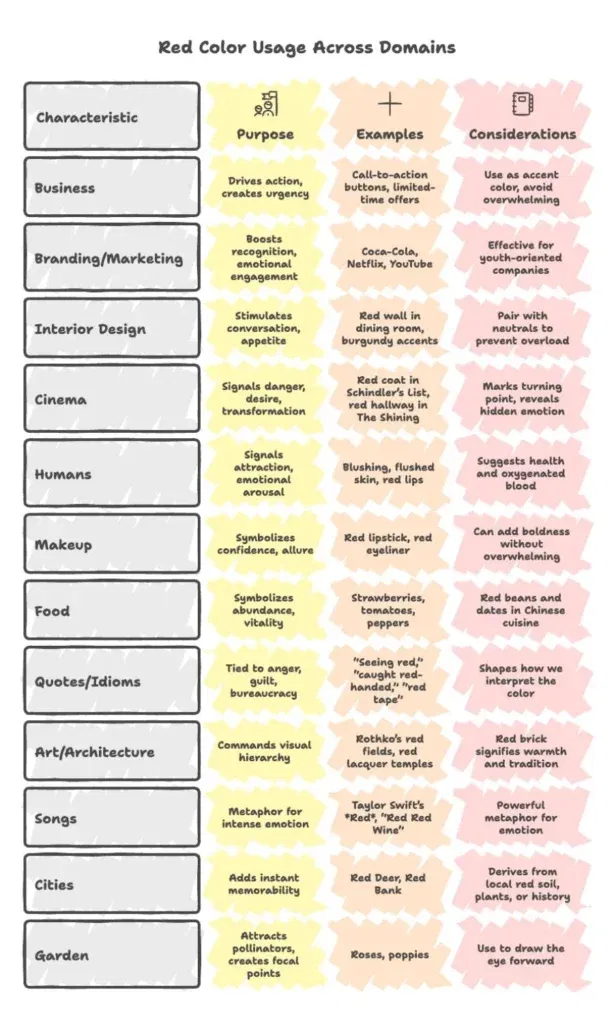
1. Red in business
Red drives action. Therefore, use it for call-to-action buttons, limited-time offers, or clearance signage to create urgency. However, research suggests avoiding overwhelming customers. Specifically, red works best as an accent color. It is not ideal as a dominant brand hue unless your business thrives on energy, like gyms or food delivery services.
2. Red in branding and marketing
Major brands like Coca-Cola, Netflix, and YouTube use red to boost recognition and emotional engagement. Scientifically, red can increase appetite, which explains its prevalence in food branding. It also creates excitement. As a result, it is especially effective for youth-oriented or entertainment-focused companies.
3. Red in interior design
A red wall in a dining room can stimulate conversation and appetite. However, in a bedroom, it may disrupt sleep due to its stimulating nature. For sophistication, use deep reds like burgundy or brick. Alternatively, use bright reds for accent pieces like lamps or pillows. Always pair red with neutrals like white, gray, or black to prevent visual overload.
4. Red in cinema
Filmmakers frequently use red to signal danger, desire, or transformation. Iconic examples include the red coat in Schindler’s List and the red hallway in The Shining. Typically, red marks a turning point or reveals a character’s hidden emotion.
5. Red in humans
Blushing, flushed skin, or red lips signal attraction or emotional arousal. From an evolutionary perspective, red skin tones suggest health and oxygenated blood. This subconsciously signals fitness to potential mates.
6. Red in makeup
Red lipstick remains a timeless symbol of confidence and allure. Notably, studies show women wearing red are perceived as more dominant and sexually receptive. Similarly, red eyeliner or nails can add boldness without overwhelming a look.
7. Red food
Red foods like strawberries, tomatoes, and peppers are rich in lycopene and antioxidants. Culturally, they symbolize abundance and vitality. For example, in Chinese cuisine, red beans and dates are used in celebratory dishes for luck.
8. Red in quotes and idioms
Expressions like “seeing red” or “caught red-handed” reveal red’s cultural ties to anger and guilt. Similarly, “red tape” denotes bureaucracy. These idioms shape how we interpret the color in daily language.
9. Red in art and architecture
From Rothko’s emotional red fields to the red lacquer of Japanese temples, red commands visual hierarchy. In architecture, red brick signifies warmth and tradition. Meanwhile, red steel beams, like in the Eiffel Tower, convey industrial strength.
10. Songs with red in the title
Taylor Swift’s Red explores intense love and heartbreak. Meanwhile, “Red Red Wine” by UB40 ties the color to emotional numbing. These songs use red as a powerful metaphor for emotion.
11. Cities with red in the name
Examples include Red Deer in Canada and Red Bank in the USA. These names often derive from local red soil, plants, or history. The color itself adds instant memorability.
12. Red in the garden
Red flowers like roses and poppies attract pollinators and create focal points. Consequently, garden designers use red to draw the eye forward or to create a sense of intimacy in outdoor spaces.
Final thoughts
Red does not ask for permission. It arrives bold, unapologetic, and alive. For millennia, it has marked the line between life and death. Additionally, it separates the sacred from the profane and desire from danger. For example, it is woven into a bride’s sari.
Conversely, it is splashed across a protest banner. Similarly, it glows in a neon “OPEN” sign. Ultimately, red speaks a universal language of urgency and emotion.
Its power lies in simplicity. Specifically, red is blood, fire, earth, and heartbeat. Therefore, it reminds us we are physical beings. We are vulnerable, passionate, and driven.
Used wisely, red energizes spaces, brands, and spirits. However, used recklessly, it overwhelms. Consequently, the key is intention. Ask yourself: Do you need to stop someone? Do you want to inspire action? Must you express love? Red answers all these calls. But you must listen to its rhythm.
In a world of muted tones, red refuses to fade. It remains the color of courage. Furthermore, it is the hue of humanity’s first cry. Finally, it is the last ember of a dying flame. Respect it. Harness it. But never underestimate it.